
“Cheap China” Is Outdated: Why Chinese Manufacturing Quality Has Changed
For many years, “Made in China” was unfairly reduced to one idea: Cheap products. But that old image no longer tells the full story.
SUPPLIER TIPSCHINA MARKET TRENDSQUALITY & LOGISTICS
“Cheap China” Is Outdated: Why Chinese Manufacturing Quality Has Changed
For many years, “Made in China” was unfairly reduced to one idea:
Cheap products.
But that old image no longer tells the full story.
Today, China is still one of the world’s biggest manufacturing centers, but the conversation has changed. It is no longer only about low prices. It is about supplier ecosystems, production speed, technical capability, material options, customization, engineering experience, and increasingly advanced manufacturing.
For entrepreneurs and growing businesses, this matters.
Because if you still think of China only as the place to find the cheapest product, you may miss the real opportunity: finding the right supplier, the right quality level, and the right production path for your business.
China Is Not Just “Low-Cost Manufacturing” Anymore
China’s manufacturing scale is difficult to ignore.
According to the World Bank’s manufacturing value-added data, China remains one of the largest manufacturing economies in the world. CSIS’s ChinaPower project reported that China’s manufacturing value-added reached US$4.66 trillion in 2023, equal to about 28% of global manufacturing output.
That scale creates something very important for buyers: depth.
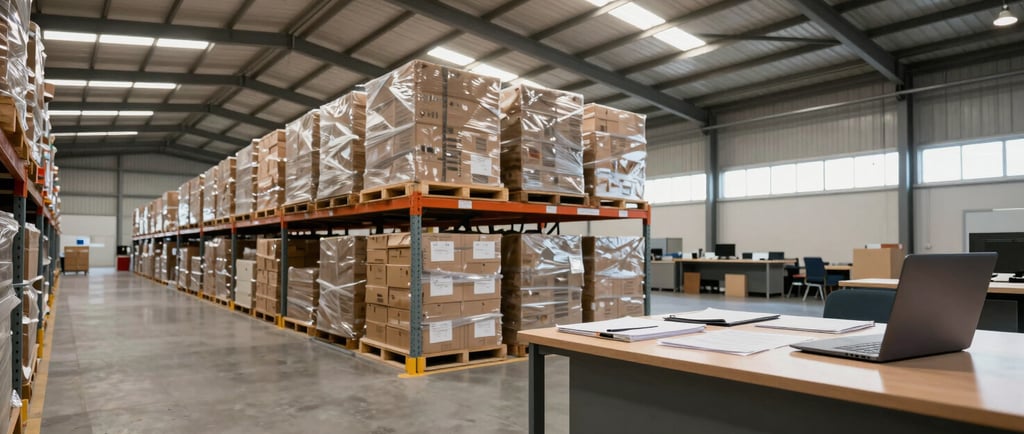
In many product categories, China does not only have one or two suppliers. It has entire supply chains: material suppliers, parts suppliers, packaging companies, mold makers, assembly factories, finishing workshops, testing providers, logistics partners, and export-support services.
That is why sourcing from China is often not just about “finding a factory.”
It is about entering a complete manufacturing ecosystem.
The Real Change: From Quantity to Capability
China’s manufacturing strategy has also moved toward upgrading.
The “Made in China 2025” industrial plan, published in 2015, focused on making Chinese manufacturing more innovation-driven, higher quality, greener, more efficient, and better integrated into higher parts of global value chains. CSIS summarizes the plan’s guiding principles as emphasizing quality over quantity, innovation, green development, industrial structure optimization, and talent development.
This does not mean every Chinese supplier is high quality.
That would not be true.
China has low-end suppliers, mid-range suppliers, and high-end suppliers — just like any major manufacturing country. The difference is that China now has a much wider range of capabilities than many beginners expect.
You can find cheap products in China.
But you can also find advanced electronics, precision components, smart devices, industrial equipment, premium packaging, engineered products, and highly customized manufacturing solutions.
The key is knowing how to identify the right supplier for the quality level you need.
High-Tech and Equipment Manufacturing Are Growing
A major reason the “cheap China” stereotype feels outdated is that China’s industrial growth is increasingly connected to higher-tech sectors.
China’s State Council reported that in 2025, the value-added output of China’s equipment manufacturing industry increased by 9.2%, and high-tech manufacturing also expanded faster than overall industrial output. Because this is an official Chinese government source, it should be read as government-reported data, but it still reflects the country’s stated industrial direction.
Reuters also reported in May 2026 that while China’s overall factory activity was flat, high-tech and equipment manufacturing continued to perform better than weaker traditional sectors.
This is important for buyers because it shows a divided reality:
Some traditional sectors are under pressure.
But many advanced manufacturing sectors are still developing quickly.
So the question is no longer:
“Is China cheap?”
The better question is:
“Which part of China’s manufacturing system matches my product and quality expectations?”
Better Quality Usually Comes From Better Process
Many sourcing problems happen because buyers focus only on price.
They ask ten suppliers for the same product, choose the cheapest quotation, and then feel surprised when the result is not what they expected.
But quality is not magic.
Quality comes from process.
It depends on:
Clear specifications
Correct material selection
Supplier experience
Sample review
Production control
Packaging confirmation
Inspection before shipment
Clear communication
Realistic pricing
If the buyer gives vague requirements, chooses only by price, skips samples, and does not check production, the risk becomes much higher.
That is not a “China quality problem.”
That is a sourcing process problem.
“Made in China” Can Mean Many Different Things
One of the biggest beginner mistakes is assuming that all Chinese suppliers are similar.
They are not.
The same product category may include:
Very cheap suppliers for low-end markets
Mid-range suppliers for general retail
Export-focused suppliers with stronger packaging and documentation
Specialized factories for technical or customized products
Premium suppliers working with stricter quality standards
The product may look similar in photos, but the actual result can be very different.
The difference may be in the material, thickness, finish, internal parts, durability, packaging, quality control, production consistency, or after-sales support.
This is why supplier selection matters.
A good China sourcing process should not only ask:
“How much is it?”
It should ask:
“Which supplier is suitable for this product, this market, this budget, and this quality expectation?”
Why Some Buyers Still Receive Bad Products
If Chinese manufacturing quality has improved, why do some buyers still receive bad products?
Usually, the reason is one of these:
They chose the cheapest supplier without understanding what was included
They sent unclear product specifications
They skipped samples
They did not confirm packaging
They did not inspect before shipment
They misunderstood the supplier’s production capability
They expected premium quality at a low-end price
They did not communicate requirements clearly
China offers many quality levels.
But buyers need to choose the right one.
If you ask for the lowest possible price, you may receive the lowest possible version of the product.
The Opportunity for Entrepreneurs
For entrepreneurs, China can still be one of the best places to start sourcing because of its supplier variety, production experience, speed, and ability to support many different product categories.
But the opportunity is not about buying blindly.
The opportunity is about sourcing smarter.
That means:
Comparing suppliers carefully
Understanding price differences
Reviewing samples properly
Confirming details in writing
Following production
Checking quality before shipment
Calculating real landed cost
Working with people who understand the China-side process
This is where many beginners need support.
Silkora helps entrepreneurs and growing businesses source from China with clearer supplier options, smoother communication, sample follow-up, production coordination, quality-check support, and practical China-side guidance.
Final Thoughts: China Is Not “Cheap.” China Is Flexible.
The old idea of “cheap China” is too simple.
China can be cheap if you only search for the lowest price.
But China can also be technical, fast, customized, scalable, and quality-driven — if you know where to look and how to manage the process.
The real advantage of sourcing from China is not just low cost.
It is choice.
You can find different suppliers, different quality levels, different materials, different production methods, and different price points.
But choice only becomes valuable when you know how to compare it.
Have a product idea but not sure what quality level or supplier type you need? Share what you know. Silkora can help you turn it into a clearer sourcing plan before you move forward.
Silkora Supply Chain
Helping entrepreneurs and growing businesses source from China with trusted China-side support.
Pages
Home
How It Works
Services
About
Contact
Reach us
hello@silkorasupply.com
Zhongshan, Guangdong, China
We’ll reply with a clear next step.
© 2026 Zhongshan Silkora Supply Chain Co., Ltd. All rights reserved.
CLOSER TO THE SOURCE